
- Imprimer
- Partager
- Partager sur Facebook
- Partager sur LinkedIn
Séminaire / Recherche
Le 2 mars 2026
Saint-Martin-d'Hères - Domaine universitaire
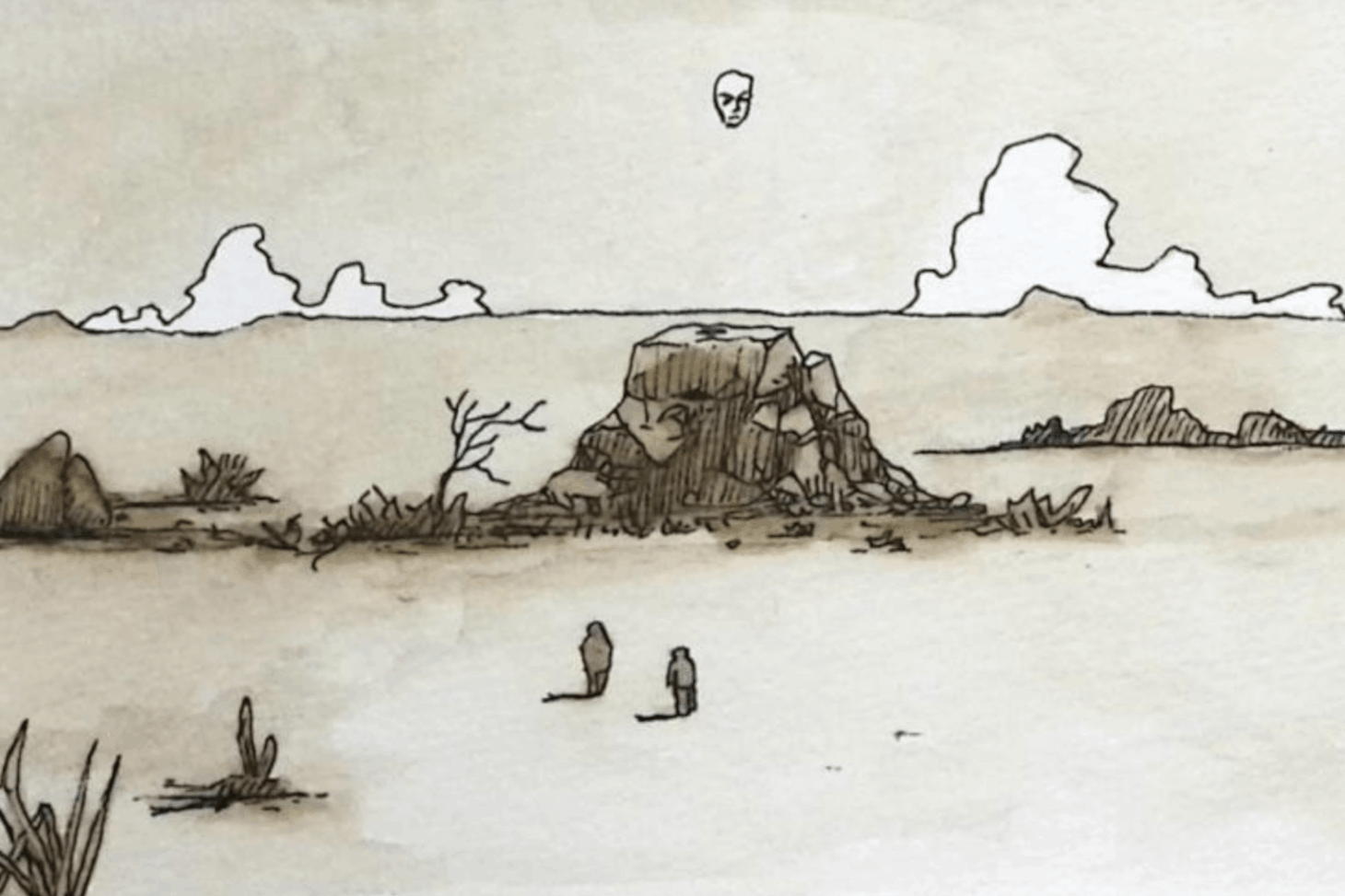
Ce séminaire s’inscrit dans le projet « Climate Fiction(s) » du programme FORESEE. Lauréat de l’appel à manifestation d’intérêt lancé dans le cadre du Plan 2030, le programme FORESEE explore les expériences vécues des conséquences du changement climatique par les individus, les organisations, les territoires et l’action publique.
Le projet structurant « Climate Fiction(s) », co-porté par Marie Thévenon et James Dalrymple, fait partie de l’axe 1 du programme FORESEE qui s’intéresse aux individus face au changement climatique : émotions, discours, récits prospectifs. Ce projet propose d’explorer différents types de fiction climatique, tant dans la littérature que dans les arts visuels, d'un point de vue anglophone, en mettant l’emphase sur la représentation des individus face au changement climatique dans ces récits prospectifs.
Lors de ce séminaire, nous aurons le plaisir d’écouter Suhasini Vincent, Professeur des Universités à l’Université Côte d’Azur qui parlera de l’œuvre fictionnelle et non-fictionnelle d’Amitav Ghosh.
Titre : The Wild as the Norm: Bearing Witness in Amitav Ghosh’s Fiction and Non-Fiction
Thème : Écocritique
Résumé : Dans The Great Derangement : Climate Change and the Unthinkable, Amitav Ghosh écrit que nous sommes entrés dans une époque où «le sauvage est devenu la norme». En présentant l’Anthropocène comme une époque où « le sauvage » et « l’étrange » sont des réalités quotidiennes, il attire l’attention sur le fait que les êtres humains agissent désormais comme une force géologique, transformant les systèmes naturels de la Terre. Dans Wild Fictions, Amitav Ghosh insiste sur la nécessité de témoigner du « temps sauvage », en alignant l’attention littéraire sur la pratique militante du témoignage en période de crise écologique. Il soutient que les événements « sauvages » de notre présent — tempêtes d’une violence inouïe, méga sécheresses, tremblements de terre et tsunamis — ne peuvent plus être compris comme des phénomènes purement naturels ou géographiques. Les méga sécheresses qui touchent les pays du Sud, par exemple, illustrent les conséquences de modes de production à forte intensité carbone qui ont enrichi une minorité tout en mettant en danger les populations vulnérables. Ce séminaire explorera la manière dont Ghosh, dans ses œuvres de fiction et ses essais, rend témoignage, consigne le temps sauvage, archive les expériences vécues, élabore des paraboles écocritiques et anticipe la façon dont les générations futures jugeront nos actions et nos réponses face à une planète en proie à la fièvre.
Les recherches de Suhasini Vincent portent sur l'écocritique et la portée juridique des lois environnementales dans les pays postcoloniaux. Elle est l'auteure de Earth Polyphony: Law, Ecocriticism And Eco-Activism in Postcolonial India. Elle est professeure de littérature britannique, de traduction et de narrativité à l'Université Côte d'Azur depuis septembre 2025.
Répondant : André Dodeman (ILCEA4, UGA)
Recherches sur Amitav Ghosh
1. « Making the Material Turn: A Pedagogical Approach on Postcolonial, Social and Ecological issues in Amitav Ghosh and Arundhati Roy’s Essays and Fiction », Climate Change Education: Reimagining the Future with Alternative Forms of Storytelling, dir., Rebecca L. Young, New York: Lexington Books, 2023, 177-200.
2. « The Spice of Life: Review of The Nutmeg's Curse: Parables for a Planet in Crisis », Resurgence, Vol. 333, Août 2022, 68.
3. « Altered Visions: Parables of Environmental Crises in Amitav Ghosh's Works », The Beacon Webzine, Avril 2022. https://www.thebeacon.in/2022/04/22/altered-visions-parables-of-environmental-crises-in-amitav-ghoshs-works/?fbclid=IwAR14sDjhY51UXuMWtHP7NOM-3d4hJaiu0RlZ4R6sYg4ERf7Sr5hdLRQuy3o
4. « Archives of Unfair Trade in Amitav Ghosh’s Fiction », Academia Letters, Article 1185. Juin 2021. https://doi.org/10.20935/AL1185
5. « Creating Ethical and Eco-friendly Communities in Amitav Ghosh’s The Glass Palace », GNOSI: An Interdisciplinary Journal of Human Theory and Praxis, Vol. 4, ISSN (Online): 2714-2485, Mai 2021, 64-74. https://www.gnosijournal.com/index.php/gnosi/article/view/108/139
6. « Material Ecocriticism: Maritime Trade, Displacement and the Environment in Amitav Ghosh’s Fictional Waterscape », Negotiating Waters: Seas, Oceans and Passageways in the Colonial and Postcolonial Anglophone World, dir., André Dodeman & Nancy Pedri, Delaware: Vernon Press, 2019, 149-165.
7. « An Eco-Critical Analysis of Climate Change and the Unthinkable in Amitav Ghosh’s Fiction and Non-Fiction », Literature and Environment – The Cradle of Ecocriticism, Humanities 2018, 7, 59, 2018.
8. « Narrating, Naming and Labelling the Environment in Amitav Ghosh’s The Hungry Tide », Ecocriticism and Environment – Rethinking Literature and Culture, New Delhi: Primus, 2018, 173-185.
9. « Metaphors of Fine Arts in Amitav Ghosh’s Dancing in Cambodia, At Large in Burma », dir., Kerry-Jane Wallart, Commonwealth: Essays and Studies (Dijon), Vol. 32, N°1, autumn 2009, 77-86.
Date
à 14h00
Localisation
Saint-Martin-d'Hères - Domaine universitaire
Salle Jacques Cartier
Maison des langues et des cultures
Contact
Marie Thévenon
marie.thevenon [at] univ-grenoble-alpes.fr
à télécharger
Organisateurs
- Imprimer
- Partager
- Partager sur Facebook
- Partager sur LinkedIn