
- Imprimer
- Partager
- Partager sur Facebook
- Partager sur LinkedIn
Séminaire / Recherche
Le 23 juin 2026
Saint-Martin-d'Hères - Domaine universitaire
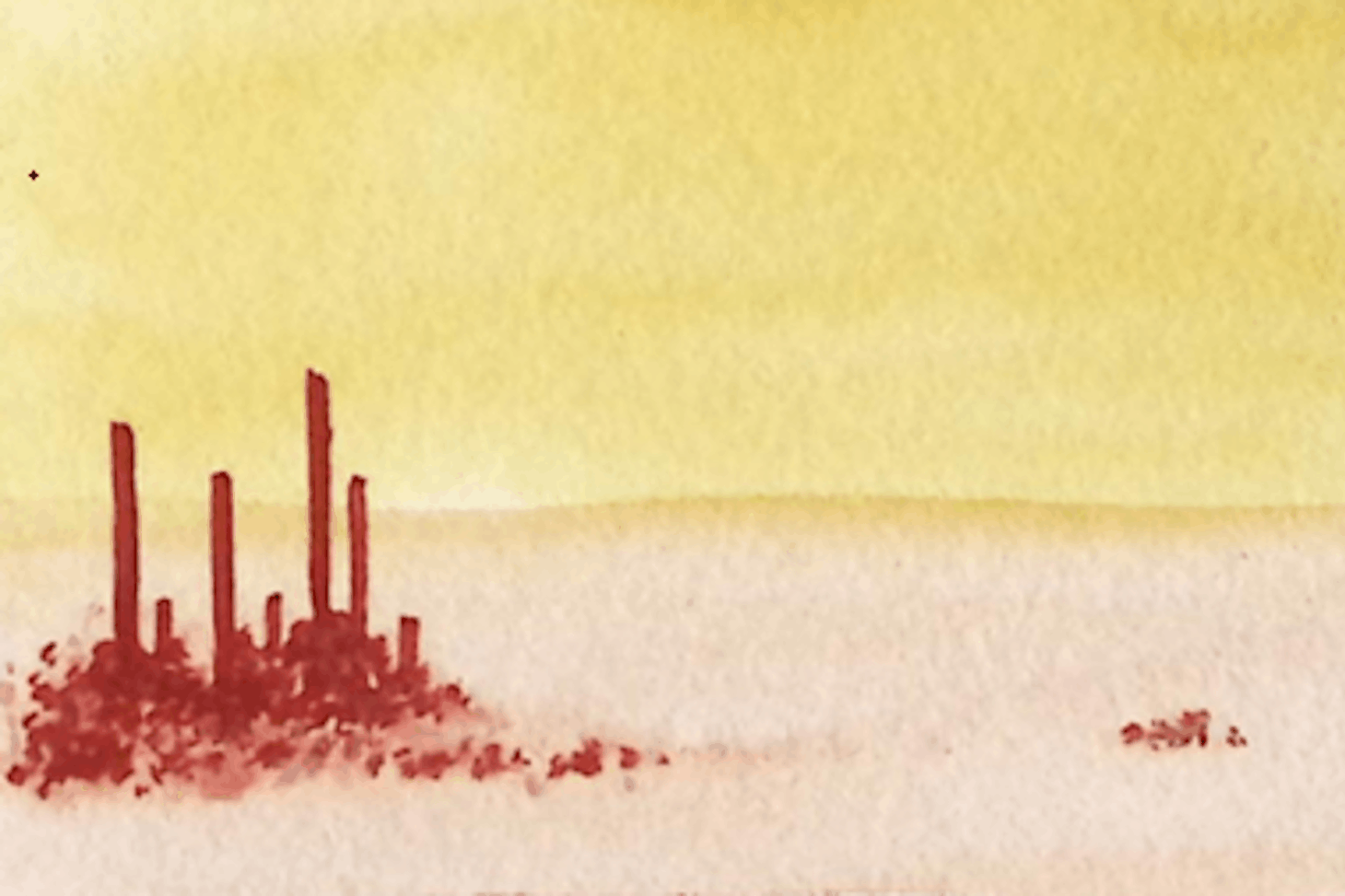
Ce séminaire est le septième d'une série de séminaires intitulée « Climate Fiction(s) » qui a pour but d'explorer différents types de fictions climatiques, à la fois dans la littérature et dans les arts visuels, d'un point de vue anglophone.
Pour ce septième séminaire, nous aurons le plaisir d’écouter Solange Ayache (Maîtresse de conférences en théâtre britannique contemporain et didactique des langues - INSPÉ de Paris, Sorbonne Université), qui parlera de trois pièces contemporaines, Lungs (2011) de Duncan Macmillan, The Trials (2022) de Dawn King et The Beautiful Future Is Coming (2024) de Flora Wilson Brown. La répondante sera Estelle Rivier-Arnaud (Université Grenoble Alpes).
Climate Fiction in Contemporary British Theatre: Staging Futurity in the Age of Ecological Crisis
Résumé
À travers l’étude de trois pièces récentes montées au cours des quinze dernières années, ce séminaire analyse la manière dont la fiction est utilisée pour dépeindre les luttes collectives et personnelles liées à la compréhension et à la gestion de la crise environnementale sur la scène britannique contemporaine. Lungs (2011) de Duncan Macmillan, The Trials (2022) de Dawn King et The Beautiful Future Is Coming (2024) de Flora Wilson Brown offrent, ensemble, un aperçu de l’évolution du théâtre climatique britannique contemporain sur plus d’une décennie. Bien qu’elles diffèrent sensiblement par leur ampleur, leur temporalité, leur imagination politique et leur registre émotionnel, ces trois pièces cherchent toutes à rendre l’ampleur abstraite de la catastrophe écologique compréhensible sur le plan émotionnel et théâtral. Prises dans leur ensemble, elles tracent une trajectoire allant de l’éco-anxiété individuelle (Lungs) à la responsabilité collective et à la justice climatique (The Trials), puis à la continuité historique et à un espoir prudent (The Beautiful Future Is Coming).
Ce séminaire examine la manière dont ces œuvres reflètent l’évolution des réponses culturelles à la crise écologique en Grande-Bretagne, du début des années 2010 au milieu des années 2020, tout en transposant les multiples dimensions de la temporalité climatique sous forme théâtrale, de la non-linéarité et de la causalité différée à l’intergénérationnalité et à l’effondrement d’un avenir progressiste. Alors que l’avenir de l’humanité apparaît non seulement incertain, mais de plus en plus menacé, et que nos capacités cognitives, éthiques et émotionnelles peinent à appréhender l’immensité de l’enjeu, l’éco-théâtre s’écarte souvent des conventions de la pièce bien construite, tout en les réinventant. Ce faisant, il explore des temporalités fragmentées, multiples ou indéterminées qui remettent en question — et parfois subvertissent — la linéarité du temps dramatique. Prises dans leur ensemble, ces pièces offrent un cadre suffisamment diversifié et représentatif pour examiner comment la rupture écologique se traduit en éco-fiction dramatique à travers diverses formes de fracture, de dislocation et de perturbation temporelle, tout en abordant les réactions ambivalentes et souvent contradictoires suscitées par la promesse non tenue d’une planète habitable. L’éco-anxiété compliquant la planification et les projections d’avenir, Lungs abandonne le réalisme conventionnel au profit de dialogues et de structures narratives fragmentées, explorant ainsi l’érosion de la prise de décision individuelle dans un contexte d’incertitude. À travers un cadre dramatique fondé sur le jugement rétrospectif, The Trials s’éloigne des conventions naturalistes, recourant à la fiction spéculative pour encourager une réflexion critique sur les défis sans précédent auxquels est confrontée la prise de décision en matière de justice pénale, dans un contexte où la responsabilité collective face au réchauffement climatique et à l’effondrement écologique est inextricablement liée. Comme ni le début ni la fin de la catastrophe écologique ne peuvent être clairement déterminés, The Beautiful Future Is Coming rejette totalement l’unité temporelle. Au lieu de cela, l’œuvre suit trois fils narratifs entremêlés qui se déroulent à travers différentes périodes historiques, s’appuyant sur les échos entre les femmes de chaque ligne temporelle et leurs préoccupations communes quant au type d’avenir dont hériteront les générations futures pour s’interroger sur ce que signifie mettre au monde une nouvelle vie dans un monde en train de s’effondrer.
S'appuyant sur ces observations, ce séminaire soutient que la mise en scène de la dérégulation émotionnelle, de la dissonance cognitive et du dysfonctionnement des processus exécutifs face à la menace d'un effondrement environnemental encourage l'expérimentation formelle dans le théâtre britannique contemporain. En mettant en scène différentes formes de paralysie décisionnelle – l’incapacité à faire des choix dans des conditions d’incertitude – et de paralysie exécutive – l’incapacité à traduire des intentions, des engagements ou des décisions en actions durables en raison d’une surcharge émotionnelle, de l’anxiété ou d’un chagrin anticipé –, ces œuvres montrent comment la fiction climatique explore les perturbations fonctionnelles, la détresse climatique et la « violence lente » – définie comme « une violence qui se produit progressivement et à l’abri des regards, une violence de destruction différée dispersée dans le temps et l’espace » (Nixon, 2011) – d’une manière qui ouvre de nouvelles perspectives dans l’écriture dramatique britannique contemporaine. Ce faisant, elles développent des formes dramatiques capables de répondre à des conditions historiques sans précédent et au défi identifié par Donna Haraway : apprendre à « rester avec la difficulté » (Haraway, 2016).
Biographie - Solange Ayache
Solange Ayache est maître de conférences en littérature anglaise et en anglais langue étrangère à l’Institut national supérieur de pédagogie de Paris (INSPE de Paris), de l’Université de la Sorbonne, et membre du centre de recherche « Voix Anglophones : Littérature et Esthétique » (VALE, UR 4085), où elle co-anime avec Aloysia Rousseau un cycle de séminaires consacré au « Théâtre et à la jeunesse au Royaume-Uni ». Ses recherches portent sur le théâtre et les arts de la scène britanniques contemporains, selon une approche interdisciplinaire s’appuyant sur les sciences humaines médicales et environnementales (écothéâtre, écocritique, écoféminisme, études sur le handicap, études sur les traumatismes, éthique des soins et santé mentale) ainsi que sur les intersections entre la littérature, les arts de la scène et les sciences (neurosciences, psychologie, sciences cognitives et physique quantique). Elle s’intéresse tout particulièrement à la manière dont les questions urgentes concernant l’état du monde, le cerveau, le corps et la perception incarnée sont représentées au théâtre, dans la littérature dramatique et dans la poésie orale. Sa thèse de doctorat, intitulée « In-Yer-Head Theatre: Staging the Mind in Contemporary BritishDrama. Towards a Quantum Psychopoetics of the Stage » (Université Paris-Sorbonne et Université de Sheffield, 2017), a analysé toute une série d’expériences théâtrales abordant la maladie mentale et la représentation des processus cognitifs sur scène. Elle a publié de nombreux articles évalués par des pairs et chapitres d’ouvrages consacrés à des dramaturges et créateurs de théâtre tels que Martin Crimp, Sarah Kane, Anthony Neilson, Nick Payne, Simon Stephens et Simon McBurney, entre autres. Elle s’intéresse également aux pratiques scéniques innovantes et aux œuvres transmédiatiques abordant ces questions dans des contextes militants et/ou éducatifs. Ses autres domaines de recherche comprennent les études de genre, la littérature et le théâtre pour enfants, le théâtre dans l’éducation et la neurodiversité en classe.
Répondant : Estelle Rivier-Arnaud
Estelle Rivier-Arnaud est professeure à l'université de Grenoble-Alpes et membre du groupe de recherche LISCA au sein du laboratoire ILCEA4. Spécialiste de Shakespeare, plus particulièrement dans le domaine des études de la scène, elle est membre de plusieurs associations de recherche scientifique : l’ESRA (European Shakespeare Research Association), la SFS (Société Française Shakespeare), la BSA (British Shakespeare Association) et le RADAC (Recherche en Arts Dramatiques Anglophones Contemporains). Elle a publié plusieurs monographies, de nombreux essais et des critiques de pièces sur Shakespeare dans la mise en scène contemporaine. Ses publications les plus récentes sont une traduction collaborative de Twelfth Night Or What You Will dans le cadre d’un spectacle de théâtre immersif intitulé La dernière nuit des fous (Avant-Scène théâtre), en collaboration avec le metteur en scène Léonard Matton, ainsi que deux articles : « With A.I the promise or the illusion of a regenerated Shakespeare? » (Université de Lausanne, 2026) et «Libérer le canon shakespearien du pentamètre iambique : nouvelles adaptations sur scène avec l’IA et la RV1» (Poitiers, congrès de la SAES 2026).
Sa prochaine publication, prévue cette année, s'intitule The Lifeblood… ou les dernières heures de Mary Stuart ; il s'agit du fruit d'un projet de recherche-création mené entre 2022 et 2024 en collaboration avec onze autres chercheurs, le poète anglais Glyn Maxwell et une compagnie de théâtre professionnelle. Ce projet bénéficie du soutien du SFR-création, du laboratoire ILCEA4 et de Radac, et sera publié dans la collection « Nouvelles Scènes » des Presses universitaires du Midi. Cet été, elle participera au Congrès mondial Shakespeare à Vérone pour présenter deux productions françaises intermédiales de Macbeth qui mettent en valeur l’excellence théâtrale et l’intemporalité de Shakespeare (séminaire 07 « Dramaturgies of Disruption : Shakespeare in the Age of Algorithmic Alienation »).
------
Ce séminaire s’inscrit dans le projet « Climate Fiction(s) » du programme FORESEE. Lauréat de l’appel à manifestation d’intérêt lancé dans le cadre du Plan 2030, le programme FORESEE explore les expériences vécues des conséquences du changement climatique par les individus, les organisations, les territoires et l’action publique.
Le projet structurant « Climate Fiction(s) », co-porté par Marie Thévenon et James Dalrymple, fait partie de l’axe 1 du programme FORESEE qui s’intéresse aux individus face au changement climatique : émotions, discours, récits prospectifs. Ce projet propose d’explorer différents types de fiction climatique, tant dans la littérature que dans les arts visuels, d'un point de vue anglophone, en mettant l’emphase sur la représentation des individus face au changement climatique dans ces récits prospectifs.
Le séminaire est également accessible en ligne sur demande, contacter Marie.Thevenon univ-grenoble-alpes.fr (Marie[dot]Thevenon[at]univ-grenoble-alpes[dot]fr).
Date
à 10h00
Localisation
Saint-Martin-d'Hères - Domaine universitaire
Salle Jacques Cartier - Maison des langues et des cultures
& en ligne (sur demande)
Contact
Marie Thévenon
marie.thevenon [at] univ-grenoble-alpes.fr
- Imprimer
- Partager
- Partager sur Facebook
- Partager sur LinkedIn